When Should You Replace Your Tires? Tread Depth Explained
By No Name Auto Repair · Norwood, MA · Updated August 2026
Replace your tires when tread reaches 2/32″ — that is the legal floor in Massachusetts and the depth at which a tire fails inspection. Most drivers should replace sooner, closer to 4/32″, because wet stopping distance grows long before the legal limit. Age matters too: rubber hardens and cracks whether you drive on it or not.
Two Coins, Two Very Different Answers
A penny tells you whether a tire is legal. A quarter tells you whether it still works in rain.
The penny test (2/32″) — four steps:
- Pick the groove that looks most worn.
- Turn the penny so Lincoln’s head points down into the groove; push until the coin bottoms out.
- If the top of Lincoln’s head is visible, tread is at or below 2/32″. That tire is finished.
- Repeat at the inner shoulder, center and outer shoulder of all four. The shallowest reading is the one that counts.
The quarter test (about 4/32″): same motion, Washington’s head first. If the tread does not reach the top of his head, you are under roughly 4/32″ — legal, but the wet grip you paid for is mostly spent.
Grooves push water out from under the tire; shallower grooves move less of it. Independent wet-braking tests keep landing on the same pattern: all-season tires worn down to around 4/32″ need noticeably more room to stop on wet pavement than the same tires did when new. Nothing about the tire looks wrong while that is happening, and it stays legal the whole way down.
Wear Bars Answer It Without a Coin
Every tire carries tread wear indicators — raised rubber bars molded across the bottom of the main grooves at 2/32″. Find them by the small triangle or the letters “TWI” on the sidewall shoulder.
Drag a fingernail from the tread across the groove. If it glides onto the bar without dropping, the tire is at the legal minimum. We check these on every car in for a rotation or tire service. The limitation: wear bars mark the legal floor, not the safe one.
Will Your Tires Pass a Massachusetts Inspection?
Tires fail the Massachusetts annual safety inspection when tread drops below 2/32″ in any original tread groove, or when a tread wear indicator contacts the road. Tread is not the only way they fail — the rules also cover the casing, the wheels, and which tires sit where.
To be clear about our role: we’re not an inspection station — stations handle the sticker; we fix what fails. Drivers from Norwood, Walpole and Dedham bring us rejection printouts most weeks, and tires are a common line on them.
| What gets checked | Rejected if… |
|---|---|
| Tread depth | Below 2/32″ in any original tread groove |
| Wear indicators | Any indicator is contacting the road |
| Sidewall and casing | Fabric break or cut over one inch, or a bump or knot |
| Ply and cord | Any ply or cord structure visible |
| Matching | Radial mixed with non-radial on the same axle, radials on the front with non-radials on the rear, or different sizes side to side |
| Studded tires | Fitted between May 1 and November 1, absent approval from the Registrar |
| Wheels | Bent or cracked, or loose or missing lug bolts and nuts |
That matching rule catches people: one cheap replacement in a different construction fails a car on something the owner never considered. Commercial and fleet vehicles fall under stricter rules than passenger cars. Current requirements sit on the state’s vehicle inspections page.
What Uneven Wear Is Telling You
A tire wearing evenly is doing its job. One wearing out in a single band is reporting a problem elsewhere on the car — fix the cause or you buy the same pattern again.
| Wear pattern | The usual suspects |
|---|---|
| Both shoulders worn, center fine | Chronic underinflation |
| Center rib worn, shoulders fine | Chronic overinflation |
| One edge only, inner or outer | Alignment angles, or worn suspension parts |
| Cupping — scalloped dips around the circumference | Worn shocks or struts, or an out-of-balance wheel |
| Feathering — ribs sharp one way, smooth the other | Toe misalignment — the wheels aimed slightly in or out instead of straight ahead |
| Isolated flat spot | A wheel locking under braking, or a brake fault |
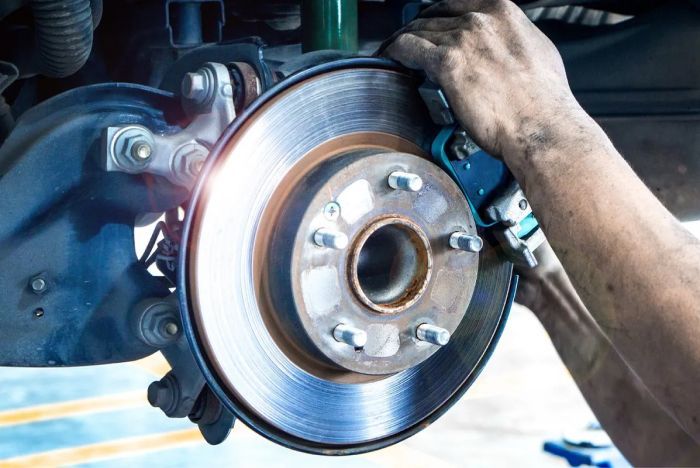
Edge wear and cupping usually trace back to alignment angles or tired steering and suspension parts; potholes do plenty of that damage. A flat spot is different — that one is a brake question before it is a tire question.
How Old Are Your Tires? Reading the DOT Date Code
Tread depth tells you how much tire is left. The date code tells you how much life the rubber has left. Those two numbers can disagree badly.
On the sidewall, find the DOT Tire Identification Number — a string beginning “DOT.” The last four digits are the build date: first two the week, last two the year. A code reading 2219 means the 22nd week of 2019. Only a partial code? Check the other sidewall; the full number is often molded on one side.
NHTSA notes that some vehicle and tire manufacturers recommend replacing tires six to ten years old regardless of remaining tread, so check your owner’s manual for what yours specifies. Heat, sunlight and time do this, not mileage, which is why it catches low-mileage cars: the convertible that comes out in June, the spare nobody has checked since new. We have pulled spares from trunks here with full tread and eight-year-old rubber.
Winter Tires Quit Long Before the Legal Limit
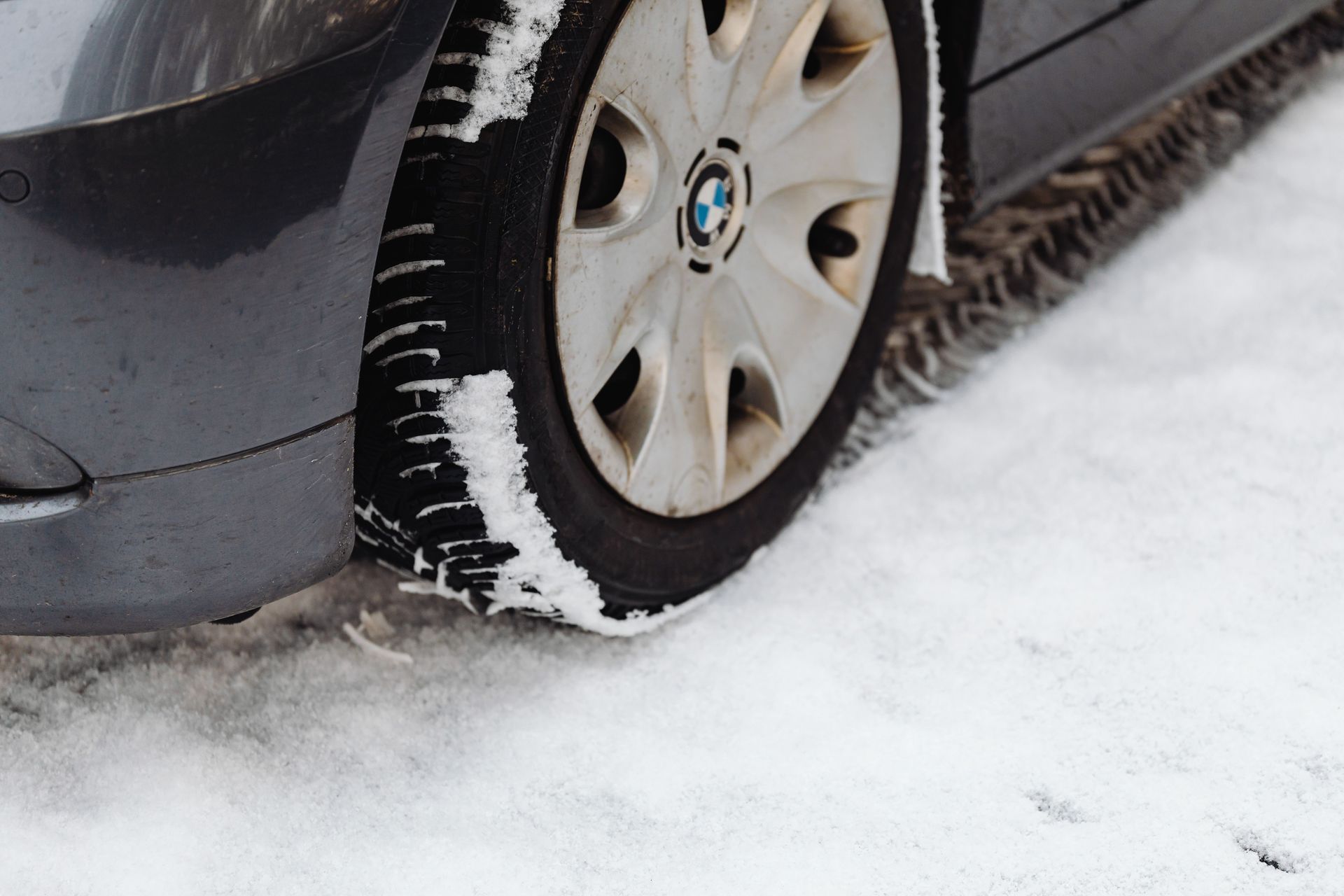
A winter tire works through three things: a compound that stays soft in cold, thousands of tiny slits called sipes that bite at ice, and deep tread that packs snow into the grooves and throws it out again. Snow grips snow better than it grips rubber, which is why depth matters more in January than in July.
Wear that depth away and the third leg goes. Once a winter tire is down to roughly 4/32″–5/32″, its snow capability is largely spent even though the tire is still legal and may hold two more summers of dry-road tread. Some winter tires carry a second set of indicators higher in the groove, often snowflake-marked, to flag that point — check the documentation for your set rather than assuming yours has them.
We see this every winter in our bay: a customer on the third or fourth season of a winter set, tread well clear of the wear bars, saying the car “isn’t as good in snow as it used to be.” The tires are not worn out. They have stopped being winter tires. Measure a seasonal set in October.
Frequently Asked Questions
What is the minimum legal tire tread depth in Massachusetts?
2/32″, measured in any original tread groove. A vehicle is rejected at the annual safety inspection if a gauge reads below that, or if a tread wear indicator is touching the road. Sidewall condition counts too: a fabric break or cut over an inch, a bump or knot, or visible cord.
Is the penny test accurate enough?
It works as a pass/fail check at 2/32″ and not much beyond. The coin tells you a tire is legal or it isn’t; it cannot tell you whether 5/32″ or 8/32″ remains, which is what you need to plan a purchase. A tread depth gauge gives an actual number.
Do I have to replace all four tires at once?
Not always, but pairs across an axle are the practical minimum. Massachusetts rules require matching sizes side to side and no mixing radial with non-radial on the same axle. All-wheel-drive vehicles are stricter, since many manufacturers cap the allowable difference in rolling circumference — how far each tire travels in one rotation — so check your owner’s manual.
How long do tires usually last?
There is no dependable mileage figure — a tire is finished when tread reaches the replacement depth or when the date code says the rubber is too old, whichever comes first. Compound, size, inflation, alignment and driving style all move tread life. Age is the firmer guideline: read the DOT date code alongside a depth measurement rather than trusting the odometer, and follow the interval your vehicle and tire manufacturers give.
Can nearly new tires still fail inspection?
Yes. Deep tread does nothing for a tire with a sidewall bulge, a cut through the fabric, exposed cords, or a bent or cracked wheel — all rejection items. Studded tires fitted outside the permitted winter window fail too. We see young tires rejected for pothole damage regularly.
Safety note: If you can see cord or fabric through the tread or sidewall, feel a bulge, or a tire keeps losing pressure, fit the spare and stop driving on it — a casing like that can let go without warning at highway speed. Same for a car that pulls under braking or grinds: have the brakes checked before the next trip.
Not sure what your tread is measuring? Bring the car to 64 Broadway in Norwood and we will gauge all four, read the date codes, and tell you what the wear pattern is pointing at — free inspection and a written estimate before anything is touched. See our tire services or call (781) 470-0707.